Liposomal glutathione can be part of a healthy-aging routine focused on supporting antioxidant defenses. Early research on oral glutathione has also explored its relationship with certain visible signs of skin aging.
Can Glutathione Help With Skin Pigmentation? What the Science Says:
September 11, 2026
Astaxanthin for Skin: Benefits and What the Research Says
September 28, 2026Healthy skin aging is not about stopping the clock; it is about helping your skin maintain its natural resilience as you age. Oxidative stress is one of the factors researchers look at when studying skin aging, which is why antioxidants such as glutathione have attracted interest. But where does liposomal glutathione fit into this picture? Can increasing the body's glutathione levels actually support healthier-looking skin over time? And what does the research say about glutathione and healthy skin aging? Glutathione is one of the body's natural antioxidants and plays a key role in maintaining redox balance and protecting cells from oxidative damage.
Because oxidative stress contributes to changes in skin structure and function over time, researchers have explored whether glutathione supplementation could also support skin health and healthy aging. The evidence is promising but still developing. A 12-week randomized, placebo-controlled human study found that oral glutathione was associated with lower wrinkle measurements at some sites, along with a tendency toward improved skin elasticity. Separately, a small pilot study of oral liposomal glutathione found that supplementation increased glutathione levels in several blood compartments and reduced certain oxidative-stress biomarkers.
So, these findings may help build a scientific connection between glutathione for skin, antioxidant protection, and healthy aging. In this article, we'll look at how glutathione may support the skin, what the research actually shows, and where anti-aging supplements, including liposomal glutathione, fit into a broader approach to healthy skin aging.
What happens to the skin as we age?
Skin aging is a gradual process influenced by both intrinsic aging—the natural changes that occur over time- and external factors such as UV exposure, pollution, and lifestyle factors. As the skin ages, changes can occur in collagen and elastin, hydration, skin thickness, and its ability to maintain a strong protective barrier.
One factor that receives particular attention is oxidative stress. Free radicals are naturally produced by the body, but factors such as UV radiation and environmental stressors can increase their formation. When the balance between free radicals and the body’s antioxidant defenses is disrupted, oxidative stress can contribute to cellular damage and changes associated with skin aging.
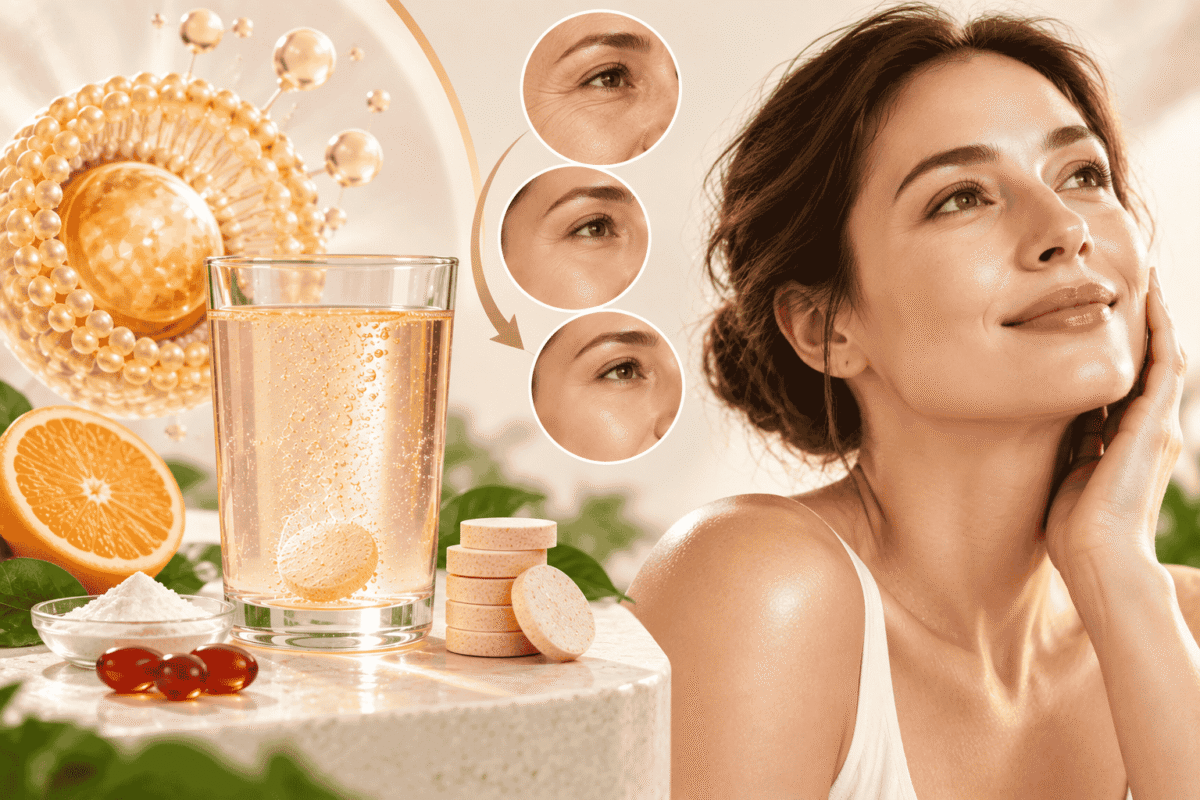
This is where antioxidants for skin become relevant. The body has its own antioxidant defense systems to help maintain this balance, including glutathione. Supporting those natural defenses is therefore being explored as part of a broader approach to healthy skin aging, rather than as a way to stop or reverse the aging process.
Over time, these combined changes can contribute to visible concerns such as fine lines, wrinkles, changes in elasticity, uneven-looking tone, and reduced skin resilience.
Why does glutathione matter for healthy skin aging?
One reason glutathione for skin aging has attracted scientific interest is its role in maintaining the body's redox balance. When oxidative stress increases, the body relies on its antioxidant systems to help manage the resulting cellular stress. Glutathione is an important part of this defense network. For the skin, this connection is particularly relevant because ongoing exposure to environmental stressors, especially UV radiation and pollution, can contribute to oxidative stress. Maintaining antioxidant defenses may therefore be one piece of supporting skin resilience as it naturally ages.
This is also where the discussion around glutathione and anti-aging needs some nuance. The goal is not to suggest that glutathione can stop the aging process or remove established wrinkles. Rather, researchers are investigating whether supporting glutathione levels can help maintain conditions that are favorable for healthy skin function over time.
Human research provides some early support for this idea. In a small randomized study, oral glutathione supplementation for 12 weeks was associated with lower wrinkle measurements at some sites and a tendency toward improved skin elasticity. These findings are interesting because glutathione supplementation affects certain visible markers of skin aging, while still falling short of establishing glutathione as an anti-aging treatment. This distinction is important when considering glutathione for youthful skin or glutathione for wrinkles: the current evidence supports further interest in its role in healthy skin aging as well.
RESEARCH & SKIN HEALTH
What does the research say about glutathione for skin?
Research on glutathione for skin is still relatively limited, but some human findings are relevant to healthy skin aging. A small randomized, placebo-controlled study examined the effects of oral glutathione supplementation over 12 weeks and reported several skin-related changes.
01
WRINKLE MEASUREMENTS
Lower wrinkle measurements were observed at some of the sites assessed in participants taking glutathione.
02
SKIN ELASTICITY
The study reported a tendency toward improved skin elasticity, although the findings were not consistent across every measurement.
03
MELANIN INDEX
Changes in melanin-related measurements were also reported, adding to research around glutathione and skin appearance.
04
UV SPOTS
The glutathione group showed a trend toward fewer UV-related spots during the study period.
05
STUDY DURATION
The results were observed after 12 weeks of supplementation, providing short-term evidence rather than evidence about long-term skin aging.
WHAT THESE FINDINGS MEAN
+
These findings offer an interesting scientific link between oral glutathione and certain measures associated with skin appearance.
LIPOSOMAL GLUTATHIONE & RESEARCH
What does the research say about liposomal glutathione?
The research on liposomal glutathione adds another piece to the picture.
01
HIGHER GLUTATHIONE LEVELS
Glutathione levels increased in several blood compartments after supplementation.
02
CHANGES IN OXIDATIVE-STRESS MARKERS
Certain biomarkers associated with oxidative stress were reduced.
03
IMPROVED GLUTATHIONE STATUS
The findings suggest that the liposomal formulation can increase glutathione availability in the body.
WHAT THE FINDINGS SUGGEST
+
Taken together with the separate human skin study, these findings provide a scientific basis for continued interest in glutathione for skin aging, while keeping expectations realistic.
GLUTATHIONE & HEALTHY SKIN AGING
Can glutathione supplements support youthful-looking skin?
The available evidence suggests that glutathione may be worth exploring as part of a broader approach to maintaining skin health as we age, particularly because of its role in the body's antioxidant defense systems. However, it should be viewed as one potential component of a skin-health routine rather than a standalone anti-aging supplement.
+
For those wondering about glutathione for wrinkles or adding anti-aging supplements to their wellness routine, the focus is better placed on supporting the skin's natural defense and maintaining a healthy, resilient appearance over time. Glutathione can be considered alongside everyday habits that contribute to healthy skin aging, rather than as a replacement for them.
THE BIGGER PICTURE
A well-rounded approach can include:
01
ANTIOXIDANT SUPPORT
Glutathione supplementation to support the body's antioxidant defenses.
02
UV PROTECTION
Daily broad-spectrum sunscreen to help protect skin from UV-related damage.
03
BALANCED NUTRITION
A balanced diet with antioxidant-rich foods.
04
HYDRATION & SLEEP
Adequate hydration and quality sleep.
05
CONSISTENT SKINCARE
A consistent skincare routine suited to your skin.
THE TAKEAWAY
✓
Together, these habits can complement a long-term approach to healthy skin aging, while making glutathione a relevant addition to a beauty and wellness routine.
CHOOSING A SUPPLEMENT
What to look for in a glutathione supplement:
01
Forms of glutathione
Liposomal formulations are designed to deliver glutathione in a lipid-based delivery system, making liposomal glutathione an option for people looking to supplement their glutathione levels.
→
02
Complementary ingredients
Ingredients such as vitamin C and other antioxidants can complement a wellness routine focused on antioxidant support.
→
03
Transparent formulation
→
04
Ease of use
→
05
Product quality and transparency
→
✓
A SIMPLE CHECK
Look beyond the glutathione amount alone and consider the form, formulation, ease of use, and overall product quality.
Why choose GlowBoost liposomal glutathione?
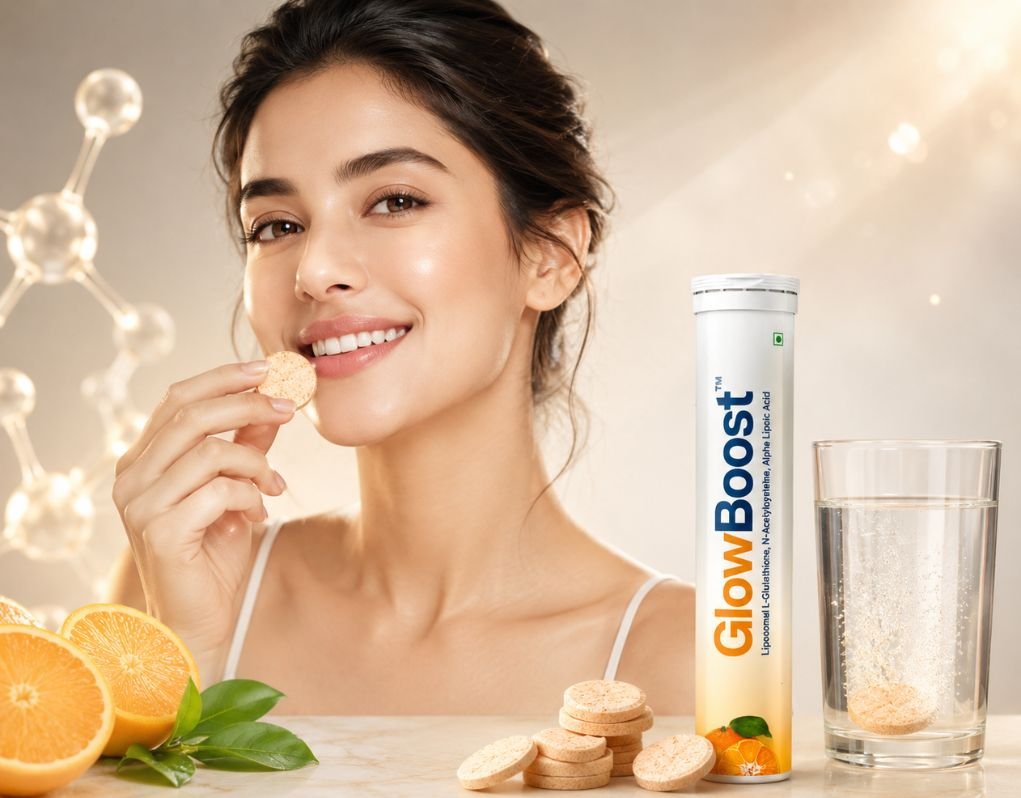
If you’re looking to add glutathione to your daily wellness routine, GlowBoost Liposomal Glutathione offers a convenient option, GlowBoost Liposomal Glutathione Effervescent Tablets offers a convenient way to make antioxidant support part of your everyday regimen.
Its liposomal format is designed around efficient delivery, making it a practical option for those exploring glutathione for skin and healthy aging.
Final thoughts
Healthy skin aging is about supporting your skin over time—not trying to stop the natural aging process. Current research makes glutathione an interesting area of study, particularly for its connection with antioxidant defense and certain measures of skin appearance.
While research on glutathione for skin aging continues to develop, incorporating antioxidant support alongside sun protection, good nutrition, and consistent skincare can be part of a thoughtful approach to maintaining healthy, youthful-looking skin.
FAQs
1Can liposomal glutathione support healthy skin aging?
2Is glutathione good for skin?
Glutathione has attracted interest for its role in antioxidant defense and its potential relationship with skin appearance. Research has explored areas including elasticity, wrinkles, melanin, and UV-related skin changes.
3Can glutathione help with wrinkles?
A small human study found lower wrinkle measurements at some assessed sites after 12 weeks of oral glutathione supplementation. However, glutathione should be viewed as supportive of healthy skin aging rather than a wrinkle treatment.
4What is the difference between glutathione and liposomal glutathione?
Liposomal glutathione uses a lipid-based delivery format for glutathione. Research on liposomal glutathione has found increases in glutathione levels and changes in certain oxidative-stress biomarkers.
5Can glutathione support youthful-looking skin?
Glutathione is being studied for its potential role in supporting skin health and antioxidant balance. This makes it an interesting addition to a broader routine focused on maintaining youthful-looking, healthy skin.
6Are glutathione supplements considered anti-aging supplements?
Glutathione supplements can be included among supplements people explore for healthy aging because of glutathione's role in antioxidant defense. They should complement, rather than replace, everyday skin-health habits such as sun protection and balanced nutrition.