Astaxanthin is a naturally occurring carotenoid and antioxidant. It has been studied for its potential role in supporting skin health, including measures such as moisture and elasticity.
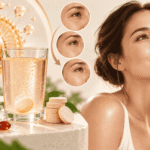
Can liposomal glutathione support healthy skin aging? What science says
September 21, 2026
What Are Antioxidants, and Why Are They Discussed for Skin?
October 8, 2026When it comes to healthy-looking skin, skincare is only one part of the picture. Nutrition, lifestyle and antioxidants can also play a role in supporting skin health from within. This is one reason astaxanthin has become an ingredient of interest in beauty and wellness supplements. Astaxanthin is a naturally occurring carotenoid and antioxidant produced by certain microalgae. Research has explored its potential role in skin health, particularly in areas such as skin moisture, elasticity and the effects of environmental stress.
But how much do we actually know about astaxanthin for skin? Can an astaxanthin supplement really make a difference? Let's look at what the research says, what you can realistically expect, and how astaxanthin fits into a broader approach to skin wellness.
What Is Astaxanthin?
Astaxanthin is a naturally occurring red-orange carotenoid produced by certain types of microalgae. It belongs to the carotenoid family of pigments and is known for its antioxidant properties.
Astaxanthin has attracted attention in the beauty and wellness space because researchers have studied oral supplementation in relation to several aspects of skin health, including moisture, elasticity, texture and visible signs associated with skin aging.
Unlike a topical skincare ingredient, an astaxanthin supplement provides nutritional support from within. It can therefore complement, rather than replace, a consistent skincare routine, a balanced diet and daily sun protection.

Why Is Astaxanthin Being Studied for Skin?
Your skin is exposed to many everyday environmental factors, including sunlight and pollution. These factors can contribute to oxidative stress, which is one reason antioxidants are often discussed in relation to skin health. Astaxanthin is particularly interesting because it has been studied in human clinical trials, rather than only in laboratory or animal research.
A systematic review of clinical studies found promising results in several areas of skin health, while also noting limitations such as small study sizes and the need for stronger research. So, while astaxanthin is not a treatment for a specific skin condition, it is an interesting ingredient for people looking to support healthy-looking skin as part of their daily wellness routine.
ASTAXANTHIN & SKIN RESEARCH
Astaxanthin Skin Benefits: What Does the Research Say?
Research into astaxanthin supplementation has looked at several measures of skin health. The evidence is encouraging in some areas, but it is important to keep expectations realistic.
01
MAY SUPPORT SKIN MOISTURE
Maintaining adequate skin moisture is important for a healthy-looking complexion.
Clinical research has investigated whether oral astaxanthin can support skin moisture. A systematic review and meta-analysis of human studies found improvements in skin moisture with oral astaxanthin supplementation.
However, the overall evidence is not conclusive. Some reviews have highlighted limitations in the available studies, including small sample sizes and differences in study design.
For this reason, astaxanthin is best viewed as nutritional support that may complement everyday skincare, rather than as a replacement for a moisturizer or other topical products.
02
MAY SUPPORT SKIN ELASTICITY
Skin elasticity naturally changes over time, which is one reason it is often included in studies of healthy skin aging.
A systematic review and meta-analysis found that oral astaxanthin supplementation was associated with improved measures of skin elasticity compared with placebo.
These findings make astaxanthin interesting for people who want to support smooth, supple and healthy-looking skin as part of their everyday wellness routine.
However, this does not mean that an astaxanthin supplement can reverse normal skin aging or restore lost elasticity overnight.
RELATED READING
For a broader look at antioxidants and healthy skin aging, you can also read Can Liposomal Glutathione Support Healthy Skin Aging? What Science Says.
03
PROVIDES ANTIOXIDANT SUPPORT
Astaxanthin is an antioxidant, which is one of the main reasons it has attracted attention in skin research.
The skin is regularly exposed to environmental stressors, including UV radiation. Antioxidants are studied for their role in helping the body manage oxidative stress, and astaxanthin has been investigated in this context.
Some human studies have reported findings related to skin responses to UV exposure and environmental stress. However, an astaxanthin supplement should never be considered a replacement for sunscreen.
SUN PROTECTION STILL MATTERS
Daily broad-spectrum sun protection remains an important part of protecting your skin from UV exposure.
04
ASTAXANTHIN AND HEALTHY SKIN AGING
Skin aging is a natural process. Over time, changes in moisture, elasticity and texture can contribute to visible signs such as fine lines and wrinkles.
This has made astaxanthin and healthy skin aging an area of research interest.
The available evidence is promising, particularly for measures such as moisture and elasticity. However, the evidence around wrinkles is less consistent. A systematic review and meta-analysis found that oral astaxanthin significantly improved skin moisture and elasticity, but the overall reduction in wrinkle depth did not reach statistical significance.
So, it is more accurate to think of astaxanthin as an antioxidant that may support healthy skin aging rather than as an anti-aging treatment.
THE RESEARCH IN PERSPECTIVE
+
The evidence around astaxanthin and skin health is promising in areas such as moisture and elasticity, but it is not conclusive across every outcome. Astaxanthin is best considered as nutritional antioxidant support that may complement a broader approach to healthy skin aging and everyday skincare.
What About Wrinkles and Fine Lines?
Wrinkles are one of the reasons people look for antioxidant supplements for skin.
Some individual studies have reported improvements in wrinkle-related measurements following astaxanthin supplementation. However, results have not been completely consistent across studies. This is an important distinction when talking about astaxanthin benefits for skin.
Astaxanthin may be worth considering as part of a broader approach to healthy skin aging, but there is not enough evidence to say that it can erase wrinkles or reverse visible signs of aging.
A realistic approach is to combine nutritional support with daily sun protection, a suitable skincare routine, balanced nutrition, adequate sleep and other healthy lifestyle habits.

ASTAXANTHIN & SKIN
How Does Astaxanthin Work for Skin?
The main interest in astaxanthin for skin comes from its antioxidant properties. In simple terms, researchers are interested in astaxanthin because it may:
01
ANTIOXIDANT SUPPORT
Provide antioxidant support against oxidative stress
02
SKIN MOISTURE
Support skin moisture
03
SKIN ELASTICITY
Support skin elasticity
04
HEALTHY SKIN & WELLNESS
Complement a healthy skin and wellness routine
05
INSIDE-OUT SKIN HEALTH
Contribute to an inside-out approach to skin health
AN IMPORTANT DISTINCTION
+
The important point is that astaxanthin should be viewed as a nutritional supplement, not as a treatment for a particular skin concern.
ANTIOXIDANT COMBINATION
Why Combine Astaxanthin With Other Antioxidants?
Astaxanthin is only one of many nutrients studied for their role in antioxidant support.
Different ingredients have different biological functions, which is why some supplements combine several complementary nutrients in one formula.
01
ASTAXANTHIN
A carotenoid antioxidant studied for its potential role in skin moisture, elasticity and healthy skin aging.
02
GLUTATHIONE
A naturally occurring antioxidant involved in the body's antioxidant defense system and studied in relation to skin appearance.
03
VITAMIN C
An essential nutrient that provides antioxidant support and contributes to normal collagen formation.
04
NAC
N-acetylcysteine is a source of cysteine, which the body uses to produce glutathione.
05
ALPHA LIPOIC ACID
An antioxidant compound included in some multi-antioxidant formulations.
WHY COMBINE THEM?
+
The purpose of combining these ingredients is not to suggest that they all work in exactly the same way. Instead, a multi-ingredient formula can provide different forms of nutritional and antioxidant support in one convenient routine.
RELATED READING
If you'd like to understand how glutathione and vitamin C are discussed together, see: Vitamin C and Glutathione Together: How They Work Together.
MULTI-ANTIOXIDANT SUPPORT
Why Choose a Multi-Antioxidant Supplement?
If you are interested in astaxanthin for skin, you may also be looking for broader nutritional support rather than relying on a single ingredient.
A thoughtfully formulated supplement can offer:
01
MULTIPLE SOURCES OF ANTIOXIDANT SUPPORT
Different ingredients have different roles within the body's antioxidant systems.
02
COMPLEMENTARY NUTRITIONAL BENEFITS
Ingredients such as astaxanthin, glutathione and vitamin C each have their own functions and areas of research interest.
03
CONVENIENCE
Combining several ingredients in one supplement can make a daily wellness routine simpler.
THE BIGGER PICTURE
+
The goal is not to find one "magic" ingredient. A supplement is best considered one part of a wider approach that includes good nutrition, skincare, sun protection and healthy lifestyle habits.
RELATED READING
For a broader introduction to skin supplements and what to look for, see our Beginner's Guide to Skin Wellness Supplements.
GLOWBOOST FORMULA
GlowBoost: Astaxanthin Along With Other Antioxidants
If you are specifically looking for an easy way to include astaxanthin as part of your daily wellness routine, GlowBoost combines it with other antioxidant-focused nutrients.
GlowBoost Liposomal Glutathione Effervescent Tablets contain:
01
Liposomal L-Glutathione
02
Vitamin C
03
N-acetylcysteine (NAC)
04
Alpha Lipoic Acid
05
Astaxanthin
Instead of taking several separate supplements, the formula brings these ingredients together in an easy-to-use effervescent format.
For people exploring astaxanthin skin benefits or looking for broader antioxidant support, GlowBoost can be considered as part of a consistent skin-wellness routine.
EASY DAILY ROUTINE
+
The effervescent format also makes daily supplementation simple: drop the tablet into water, let it dissolve, and enjoy.
EVERYDAY SKIN WELLNESS
Astaxanthin and Your Everyday Skin Routine
An antioxidant supplement should complement your existing habits, not replace them. For healthy-looking skin, consider the bigger picture:
01
USE SUNSCREEN
Daily broad-spectrum sun protection remains one of the most important ways to reduce UV exposure.
02
EAT A BALANCED DIET
A varied diet provides a range of vitamins, minerals and other nutrients.
03
STAY HYDRATED
Adequate fluid intake supports overall health and normal body functions.
04
FOLLOW A CONSISTENT SKINCARE ROUTINE
Choose products suited to your skin and its needs.
05
GET ENOUGH SLEEP
Good sleep is an important part of overall wellness.
06
BE CONSISTENT
Supplements are not designed to produce overnight changes. Research studies generally evaluate outcomes over several weeks, and individual experiences can vary.
ASTAXANTHIN & SKIN BENEFITS
How Long Does Astaxanthin Take to Show Skin Benefits?
There is no established timeframe for visible skin benefits from astaxanthin.
Clinical studies have generally evaluated supplementation over several weeks rather than expecting immediate changes.
01
NO FIXED TIMELINE
There is no established timeframe for visible skin benefits from astaxanthin.
02
RESEARCH OVER SEVERAL WEEKS
Clinical studies have generally evaluated supplementation over several weeks rather than expecting immediate changes.
03
RESULTS CAN VARY
This does not mean everyone will see the same results or that a particular timeframe guarantees a visible change.
04
CONSISTENCY MATTERS
If you choose to take an astaxanthin supplement, consistency and realistic expectations are more useful than expecting overnight results.
THE KEY TAKEAWAY
+
Astaxanthin is not expected to produce overnight skin changes. Research is generally conducted over several weeks, so consistency and realistic expectations are important.
THE BOTTOM LINE
The Bottom Line
Astaxanthin is an interesting antioxidant for skin, and human research has explored its potential role in areas such as skin moisture, elasticity and healthy skin aging.
The evidence is promising, but it is still developing. Some findings are encouraging, while other areas, such as wrinkle reduction, need stronger and more consistent research.
A BROADER APPROACH TO SKIN WELLNESS
+
So, rather than thinking of astaxanthin as a quick fix for wrinkles, dryness or other skin concerns, it makes more sense to view it as part of a broader approach to skin wellness.
If you want to explore astaxanthin alongside other antioxidant nutrients, GlowBoost combines astaxanthin with liposomal glutathione, vitamin C, NAC and alpha lipoic acid in one convenient effervescent supplement.
Healthy-looking skin is not about relying on one ingredient. It is about building a consistent routine that supports your skin from both inside and out.
FAQs
1What is astaxanthin used for?
2Is astaxanthin good for skin?
Research suggests that oral astaxanthin may support certain aspects of skin health, particularly moisture and elasticity. However, the evidence is still developing and results may vary.
3Can astaxanthin help with skin aging?
Astaxanthin is being studied for its potential role in healthy skin aging. Research has shown promising findings for skin moisture and elasticity, but it should not be considered a treatment that stops or reverses the natural aging process.
4How long does astaxanthin take to show skin benefits?
There is no established timeframe for visible results. Human studies have generally evaluated astaxanthin supplementation over several weeks rather than expecting immediate changes.
5Can I take astaxanthin with other antioxidants?
Astaxanthin can be included as part of an antioxidant-focused supplement routine. Some formulations combine astaxanthin with nutrients such as glutathione, vitamin C, NAC and other antioxidants.
6Are glutathione supplements considered anti-aging supplements?
Glutathione supplements can be included among supplements people explore for healthy aging because of glutathione's role in antioxidant defense. They should complement, rather than replace, everyday skin-health habits such as sun protection and balanced nutrition.
7Does GlowBoost contain astaxanthin?
Yes. GlowBoost contains astaxanthin along with liposomal glutathione, vitamin C, NAC and alpha lipoic acid in an effervescent tablet formulation.