Antioxidants are compounds that help the body manage oxidative processes. Some antioxidants, including vitamin C, glutathione, and astaxanthin, have been studied in relation to different aspects of skin health.

Astaxanthin for Skin: Benefits and What the Research Says
September 28, 2026Your skin is exposed to more than just the products you apply to it. Every day, factors such as sunlight, pollution, and normal metabolic processes can contribute to oxidative stress. This is one reason antioxidants are often discussed in relation to skin health. Antioxidants are compounds that help the body manage oxidative processes and support its natural defense systems. Some are produced naturally by the body, while others come from food, skincare ingredients, or supplements.
But what exactly do antioxidants do for the skin? Are all antioxidants the same? And can taking antioxidant supplements actually support healthy-looking skin? From vitamin C and glutathione to astaxanthin and alpha-lipoic acid, several antioxidants have been studied for their potential role in supporting skin health. Understanding how they work and what the research actually tells us can help you make a more informed choice about antioxidant-rich foods, skincare, and supplements.
SKIN HEALTH & ANTIOXIDANT SCIENCE
Understanding Oxidative Stress and Antioxidant Support
Oxidative stress occurs when the production of free radicals and other reactive molecules outweighs the body's ability to manage them through its natural defense systems.
Everyday factors such as UV exposure, pollution, and normal metabolic processes can contribute to oxidative stress. This is why antioxidant defenses are an important part of the broader conversation around skin health.
Antioxidants help the body manage oxidative processes and support its natural protective mechanisms. Some are produced within the body, while others can be obtained through food, skincare ingredients, and supplements.
FOUR ANTIOXIDANTS TO KNOW
Antioxidants Researchers Are Exploring
Several antioxidants have attracted interest for their potential role in supporting skin from within, including:
01
ANTIOXIDANT
C
Vitamin C
A well-known antioxidant that also plays a role in normal collagen production.
02
ANTIOXIDANT
GSH
Glutathione
A naturally occurring antioxidant involved in the body's antioxidant defense system.
03
CAROTENOID
A
Astaxanthin
A carotenoid antioxidant studied for its potential role in helping the skin manage oxidative stress.
04
CELLULAR SUPPORT
ALA
Alpha-lipoic acid (ALA)
An antioxidant involved in cellular energy metabolism and the body's broader antioxidant network.
WHY THE DISTINCTION MATTERS
+
These antioxidants do not all work in the same way, and research into their potential skin benefits varies. Looking at them individually provides a clearer picture of what researchers are actually studying.
The Antioxidants Getting Attention in Skin Research
The growing interest in antioxidants for skin has brought several compounds into focus, each with its own area of research.
Vitamin C is widely recognized for its role in collagen formation and is a familiar ingredient in both skincare and nutritional products.
Glutathione has attracted attention because of its role in the body’s antioxidant network, along with research exploring its relationship with skin pigmentation. If you want to understand this ingredient in more detail, you can read our guide on Liposomal Glutathione: What Is It and How Does It Work?
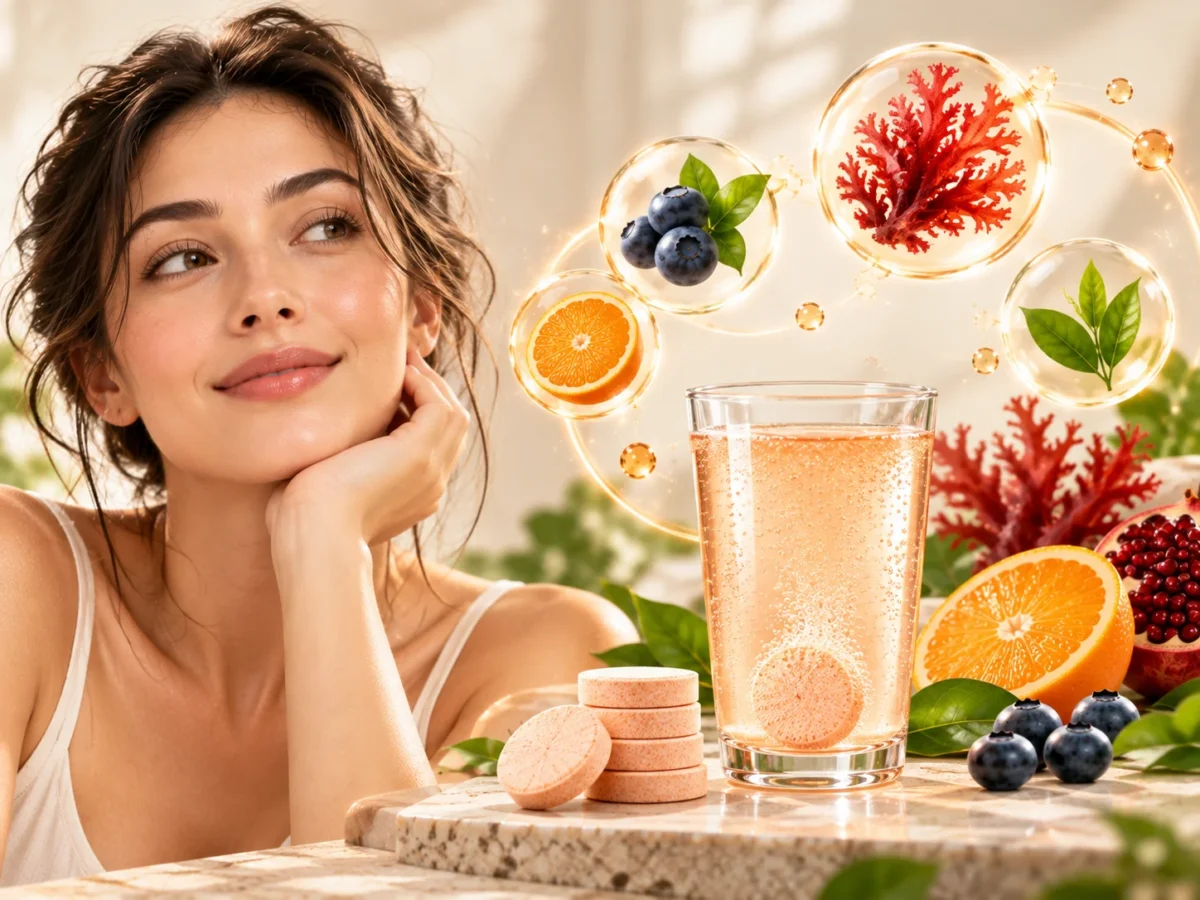
Another compound being studied is astaxanthin, a carotenoid naturally found in certain marine organisms. Research has examined its potential effects on factors such as skin moisture, elasticity, and the skin’s response to environmental stress.
For a deeper look at the available evidence, read Astaxanthin for Skin: Benefits and What the Research Says.
Alpha-lipoic acid (ALA) is also part of the conversation. It participates in cellular energy metabolism and can interact with other antioxidant systems in the body.
Although these compounds are often grouped under the broad term “antioxidants,” their biological functions and areas of research are different. Understanding those differences is important when looking at antioxidant supplements for skin.
Why Glutathione Has Become a Focus of Skin Research
Among the antioxidants being explored in relation to skin, glutathione has received particular attention because of its involvement in several biological pathways, not simply because of its antioxidant activity. Researchers have examined its role in cellular processes, including pathways associated with melanin production. This has contributed to growing interest in glutathione and skin. This interest has also extended beyond topical skincare. Studies have explored whether oral glutathione supplements can influence certain skin-related outcomes, making it an area of interest within nutritional and dermatological research. The evidence is still developing, and glutathione should not be viewed as a universal solution for every skin concern. Its biological role and the research surrounding oral supplementation simply make it an interesting ingredient to understand when discussing antioxidant support for skin. For a closer look at the research, read Can Glutathione Help With Skin Pigmentation? What the Science Says.
UNDERSTANDING GLUTATHIONE
Glutathione and Its Role in the Body
Glutathione is a naturally occurring compound produced by the body and found in cells throughout the body. It is made from three amino acids: glutamate, cysteine, and glycine.
Unlike many nutrients that need to be obtained primarily through food, the body can synthesize glutathione on its own.
Its functions extend across several cellular processes. Glutathione participates in reactions that help maintain the balance between its reduced form (GSH) and oxidized form (GSSG), while also working alongside other components of the body's antioxidant network.
It is also involved in the metabolism of certain compounds and in cellular processes that help the body handle potentially reactive substances.
Glutathione availability can vary depending on factors such as age, nutrition, and physiological conditions. This has led researchers to explore whether supporting glutathione levels through diet or supplementation could have measurable effects.
GLUTATHIONE & SKIN RESEARCH
+
For skin research, one particular area has generated considerable interest: glutathione's relationship with melanin production. This is one reason it has been studied in connection with pigmentation and complexion, alongside its broader biological functions.
↗
RELATED READING
You can also learn more about the relationship between glutathione and healthy skin aging in Can Liposomal Glutathione Support Healthy Skin Aging? What Science Says.
The Antioxidants Getting Attention in Skin Research
The skin’s antioxidant defenses are influenced by what happens inside the body, which is one reason nutrition has become an important part of skin research.
Alongside a balanced diet, oral antioxidant supplements are being studied as a way of providing specific compounds in concentrated amounts.
Research has explored supplements containing ingredients such as glutathione, vitamin C, and carotenoids, with studies looking at outcomes including pigmentation, moisture, elasticity, and other measures of skin appearance.

However, results can vary depending on the ingredient, dosage, duration of use, and study design.
This means an antioxidant supplement for skin should be viewed as a source of nutritional support rather than a replacement for a balanced diet, sunscreen, or a consistent skincare routine.
Supplements may be relevant for people who want to complement their existing approach to skin care, but expectations should remain realistic.
If you are new to the subject, our Beginner’s Guide to Skin Wellness Supplements covers some of the basics to consider before adding a skin supplement to your routine.
NUTRITION & SKIN WELLNESS
Natural Sources of Antioxidants for Skin
Food is one of the simplest ways to include antioxidants in your daily diet. A varied diet can provide a range of antioxidant compounds and nutrients, including:
01
VITAMIN C
🍊
🍋
Citrus Fruits and Amla
Rich sources of vitamin C, which contributes to normal collagen formation and antioxidant defenses.
01 / FOOD SOURCE
02
PLANT COMPOUNDS
🫐
🍓
Berries and Colorful Fruits
Provide compounds such as anthocyanins and other plant antioxidants.
02 / FOOD SOURCE
03
LYCOPENE
🍅
Tomatoes
A dietary source of lycopene, a carotenoid with antioxidant properties.
03 / FOOD SOURCE
04
CAROTENOIDS
🥕
🥬
Carrots and Leafy Greens
Provide carotenoids and other nutrients that contribute to overall antioxidant intake.
04 / FOOD SOURCE
05
VITAMIN E
🥜
🌰
Nuts and Seeds
Provide vitamin E and other compounds that form part of a balanced diet.
05 / FOOD SOURCE
06
POLYPHENOLS
🍵
Green Tea
Contains polyphenols, including catechins, that have antioxidant properties.
06 / FOOD SOURCE
BUILD A BALANCED FOUNDATION
Variety matters more than relying on one food.
Including a variety of antioxidant-rich foods is a good foundation for overall nutrition.
+
i
For people looking for additional antioxidant support, supplements can complement — but should not replace — a nutrient-rich diet.
Who May Consider an Antioxidant Supplement for Skin?
An antioxidant supplement may be worth considering for people who want to complement their everyday diet and skincare routine with targeted nutritional support. It may be particularly relevant for those interested in ingredients that have been researched for their potential role in skin appearance and antioxidant defenses.
However, supplementation is not necessary for everyone. A varied diet remains the foundation of good nutrition, while basics such as sun protection, adequate hydration, sleep, and a consistent skincare routine continue to play an important role. If you are considering an antioxidant supplement for skin, look beyond a single ingredient. The overall formulation, ingredient transparency, quality, and your individual needs are all worth considering. For those specifically interested in glutathione supplements, the same principle applies. It is better to look at the overall formulation rather than choosing a product based only on a single advertised benefit.
ANTIOXIDANT SUPPORT
Why Choose GlowBoost?
If you are looking for a convenient way to include antioxidant support in your daily routine, GlowBoost combines several researched compounds in an easy-to-use effervescent format.
01
Convenient Effervescent Format
Each tablet dissolves in water, providing an alternative to traditional tablets or capsules.
02
Multiple Antioxidant Ingredients
The formulation combines glutathione, vitamin C, N-acetyl cysteine (NAC), and astaxanthin. Rather than focusing on a single ingredient, GlowBoost brings several compounds together in one daily serving.
03
Fits Into Your Existing Routine
GlowBoost may be an option for people exploring glutathione supplements, antioxidant supplements for skin, or nutritional support as part of an existing skincare routine.
A BALANCED APPROACH
+
As with any supplement, it works best as part of a broader approach that includes a balanced diet and everyday skincare essentials rather than being treated as a replacement for them.
↗
EXPLORE THE PRODUCT
GlowBoost Liposomal Glutathione Effervescent Tablets
Learn more about the ingredients, formulation, and effervescent format.
→
RELATED READING
For a closer look at how vitamin C and glutathione are discussed together, read Vitamin C and Glutathione Together: How They Work Together.
Final Thoughts
Antioxidants have become an interesting area of skin research, with compounds such as vitamin C, glutathione, and astaxanthin receiving particular attention. Different antioxidants have different biological roles, and the amount of research available varies from one ingredient to another. While some studies have explored their potential relationship with factors such as skin moisture, elasticity, pigmentation, and overall appearance, the evidence does not mean that every antioxidant supplement will produce the same results.
Supplements are not a replacement for good nutrition, sun protection, or a consistent skincare routine. They can, however, be considered as one part of a broader approach to skin wellness. For those looking for convenient oral antioxidant support, GlowBoost combines glutathione, vitamin C, NAC, and astaxanthin in an easy-to-use effervescent format.
FAQs
1What are antioxidants for skin?
2Can antioxidants improve skin appearance?
Certain antioxidants have been researched for their potential effects on factors such as pigmentation, moisture, and elasticity. However, results can vary depending on the compound, dosage, duration, and how it is used.
3What is an antioxidant supplement for skin?
An antioxidant supplement provides one or more compounds with antioxidant properties in a concentrated form. Formulations can contain ingredients such as glutathione, vitamin C, astaxanthin, or other antioxidant compounds.
4Can I take glutathione as an oral supplement?
Oral glutathione has been studied as a form of supplementation, including in research examining skin-related outcomes. If you are considering a glutathione supplement, follow the product's directions and seek professional advice when appropriate.
5What antioxidants are commonly used in skin supplements?
Vitamin C, glutathione, astaxanthin, and alpha-lipoic acid are among the antioxidants that have received attention in nutritional and skin research.
6What is GlowBoost?
GlowBoost is an effervescent antioxidant supplement containing glutathione, vitamin C, NAC, and astaxanthin. It is designed to provide convenient daily antioxidant support as part of a broader approach to skin wellness.